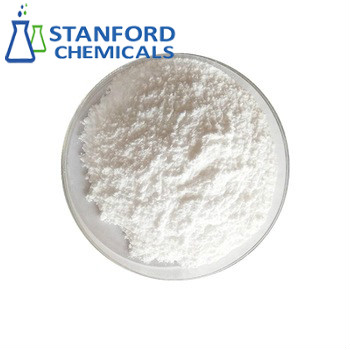
Ritonavir Specifications
| Product Name |
Ritonavir |
| CAS Registry Number |
155213-67-5 |
| Molecular Formula |
C37H48N6O5S2 |
| Molecular Weight |
720.946 g/mol |
| Purity |
98% |
| Appearance |
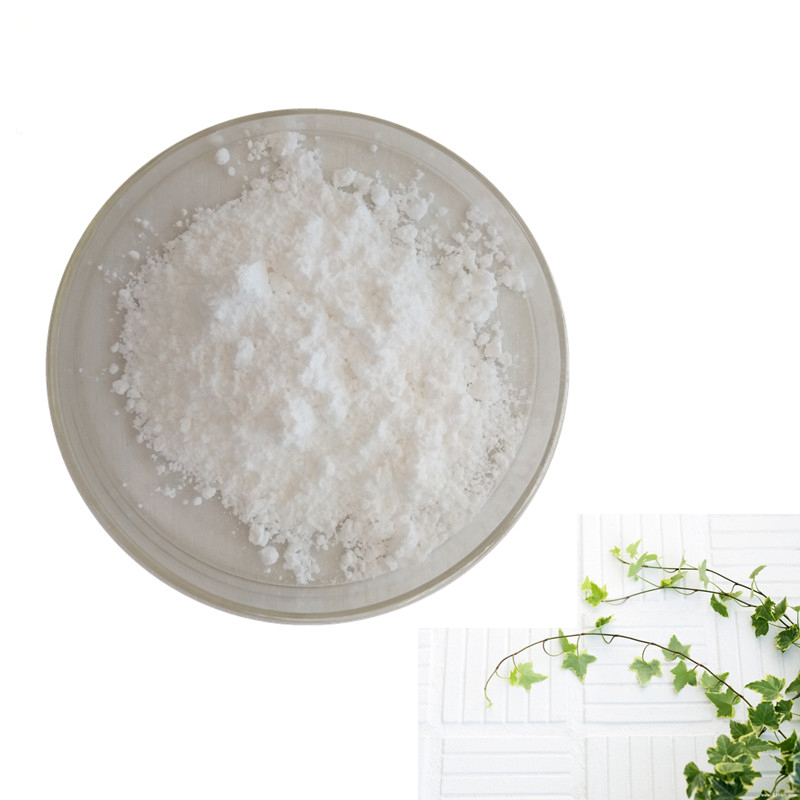
White powder |
| Package |
1kg-25kg |
| Shelf life |
2 years |
| Functions |
Antiviral, therapy for HIV-1, potential inhibitor of COVID-19 |
Ritonavir Description
Ritonavir is an HIV protease inhibitor that interferes with the reproductive cycle of HIV. The mechanism of action of the anti-HIV drug lopinavir and ritonavir is to block the enzymes required for virus replication. It is often used in combination with other antiretrovirals and serves as both a protease inhibitor and a pharmacokinetic enhancer. Lopinavir/ritonavir have been shown to reduce coronavirus levels that cause SARS and MERS in animal studies.
Ritonavir is an HIV protease inhibitor that interferes with the reproductive cycle of HIV.
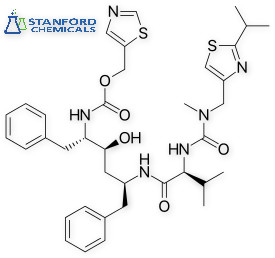
[caption id="attachment_7506" align="alignnone" width="275"]
ritonavir[/caption]
Ritonavir Solubility / Properties
Ritonavir is poorly soluble in water, with solubility less than 1 mg/mL at physiological pH. This poor solubility can impact its bioavailability and absorption in the body, necessitating the use of formulations that enhance its solubility for effective therapeutic use.
Ritonavir Half-Life
The half-life of ritonavir is approximately 3 to 5 hours. However, due to its role as a CYP3A4 inhibitor, the half-lives of other drugs metabolized by this enzyme can be significantly prolonged when co-administered with ritonavir. This pharmacokinetic interaction is a key reason ritonavir is used as a booster for other protease inhibitors.
Ritonavir Applications
Ritonavir is indicated in combination with other antiretroviral agents for the treatment of HIV-1 infected patients (adults and children of 2 years of age and older).
Ritonavir is a potent inhibitor of cytochrome P450 3A4 (CYP3A4). This inhibition allows ritonavir to boost the levels of co-administered drugs that are substrates of CYP3A4, particularly other protease inhibitors used in the treatment of HIV.
Reference:
- L. Morissette; S. Soukasene; D. Levinson; M. J. Cima; O. Almarsson (2003). "Elucidation of crystal form diversity of the HIV protease inhibitor ritonavir by high-throughput crystallization"
- Hsieh, Yi-Ling; Ilevbare, Grace A.; Van Eerdenbrugh, Bernard; Box, Karl J.; Sanchez-Felix, Manuel Vincente; Taylor, Lynne S. (2012-05-12). "pH-Induced Precipitation Behavior of Weakly Basic Compounds: Determination of Extent and Duration of Supersaturation Using Potentiometric Titration and Correlation to Solid State Properties". Pharmaceutical Research. 29 (10): 2738–2753.
- Nieminen, Tuija H.; Hagelberg, Nora M.; Saari, Teijo I.; Neuvonen, Mikko; Neuvonen, Pertti J.; Laine, Kari; Olkkola, Klaus T. (2010). "Oxycodone concentrations are greatly increased by the concomitant use of ritonavir or lopinavir/ritonavir". European Journal of Clinical Pharmacology. 66 (10): 977–985.