Oxymatrine Powder Technical Description
Oxymatrine (C₁₅H₂₄N₂O₂) is a white to off-white crystalline solid with a distinct bitter taste and minimal odor. Under standard conditions, it is a stable, non-hygroscopic material, though prolonged light exposure may cause gradual darkening. The compound exhibits moderate thermal stability, decomposing near 210°C without a defined melting point.
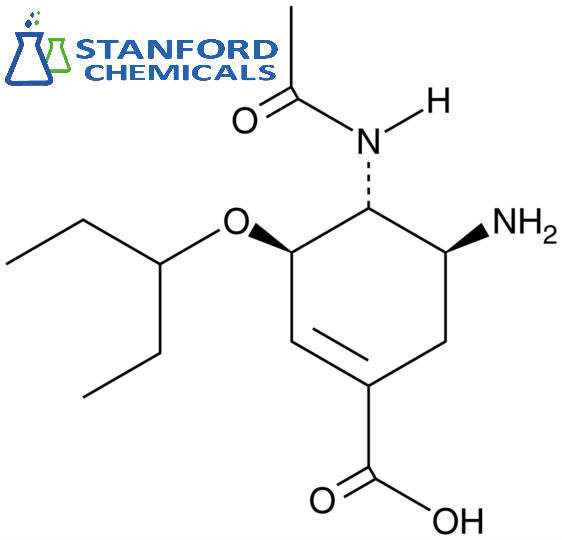
Its molecular structure features a quinolizidine core with an N-oxide group and a bridged oxygen atom, contributing to its polarity and conformational rigidity. Oxymatrine demonstrates high solubility in water (~1:8 w/v) and lower alcohols (methanol, ethanol) but limited solubility in non-polar solvents such as chloroform or ethyl acetate.
Crystallographic studies reveal an orthorhombic morphology, with characteristic FTIR absorption bands at:
-
1640 cm⁻¹ (carbonyl stretch)
-
1100 cm⁻¹ (N→O vibration)
-
2850–2980 cm⁻¹ (alkyl C-H stretch)
UV-Vis spectroscopy shows a maximum absorption at 220 nm, consistent with its conjugated system. The powder remains stable under acidic conditions but undergoes gradual degradation in alkaline environments (pH > 9), particularly at elevated temperatures. Polymorphism is observed, with the α-form being the most prevalent.
Typical particle size distribution ranges from 10–100 μm, with a bulk density of ~0.6 g/cm³. Optical rotation measurements yield [α]D²⁰ = +30° (c=1, H₂O). The N-oxide moiety imparts zwitterionic properties, facilitating salt formation, while the strained bicyclic system contributes to its stereospecific bioactivity. These intrinsic characteristics define its material behavior and serve as key analytical markers.
Oxymatrine Powder Specifications
Properties
| Property |
Value |
| Material |
Oxymatrine |
| CAS Number |
16837-52-8 |
| Molecular Formula |
C15H24N2O2 |
| Purity |
98% (Titration) |
| Appearance |
Colorless crystal |
| Molecular Weight |
264.36 |
| Solubility |
Soluble in Water |
*The above product information is based on theoretical data. For specific requirements and detailed inquiries, please contact us.
Oxymatrine Powder Applications
1. Pharmaceutical Industry
Oxymatrine is clinically employed in the treatment of chronic hepatitis B and C, where it inhibits viral replication and mitigates liver inflammation and fibrosis. Additionally, it serves as an adjunct therapy for chemotherapy-induced leukopenia by stimulating white blood cell production.
2. Veterinary & Agricultural Uses
As a natural biopesticide, oxymatrine effectively combats fungal pathogens (e.g., downy mildew) and insect pests. In veterinary medicine, it is used as an antiparasitic agent against infections such as babesiosis in livestock and in aquaculture disease management.
3. Research & Diagnostics
The compound is widely utilized as a reference standard in analytical quality control. Preclinical studies explore its role in neuropathic pain modulation via calcium channel subunit interaction. Fluorescently labeled derivatives enable cellular imaging and drug delivery tracking.
4. Cardiovascular & Anti-Inflammatory Therapeutics
Oxymatrine exhibits cardioprotective effects by reducing mitochondrial oxidative stress and calcium overload, making it valuable in managing myocardial injury. Its anti-inflammatory properties support applications in autoimmune disorders and dermatological conditions such as eczema.
5. Oncology Support
Research highlights its antitumor potential, demonstrating apoptosis induction in cancer cells and synergistic effects with conventional chemotherapy. Current studies focus on its ability to inhibit proliferation pathways in prostate and liver cancers.
6. Cosmeceutical Applications
Due to its anti-irritant and skin-barrier-strengthening effects, oxymatrine is incorporated into topical formulations designed for sensitive and inflammatory skin conditions.
Oxymatrine Powder - Frequently Asked Questions
Q1: How does oxymatrine differ from matrine?
Oxymatrine contains an N-oxide group that matrine lacks, resulting in higher water solubility and lower acute toxicity while maintaining bioactivity. Oxymatrine also shows stronger anti-fibrotic effects in liver and lung tissues compared to matrine.
Q2: Does oxymatrine interact with other drugs?
Yes. Oxymatrine may enhance the effects of sedatives and antiarrhythmics, and could interact with immunosuppressants. It should be used cautiously when taken with cardiotoxic or hepatotoxic medications.
Q3: What are the storage requirements for oxymatrine?
Store in airtight containers at 2-8°C, protected from light and moisture. Note that solutions degrade quickly at room temperature, while freeze-dried forms have better stability.