
Ursolic Acid (UA) is widely distributed in nature and is a classic representative of pentacyclic triterpenoid natural compounds. It exists in various plants either in free form or combined with sugars as glycosides. This widespread presence gives it significant research value.
How to Obtain Ursolic Acid
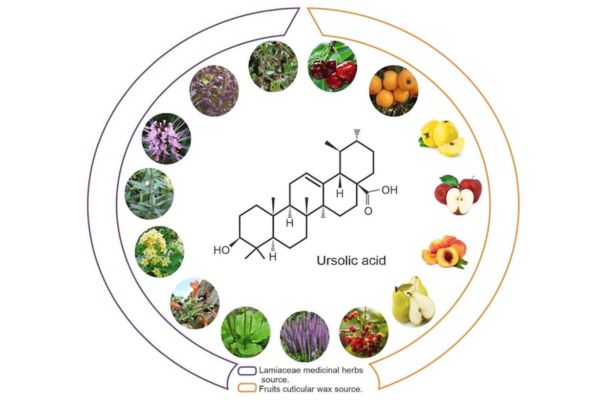
Fig 1. Plant sources and structure of ursolic acid: cherry, loquat, pear, peach, quince, apple, bilberry...[1]
Sources of Ursolic Acid
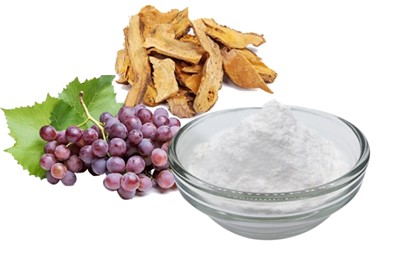
You can find ursolic acid in lots of common plants — apples, hawthorn, and glossy privet fruit, for example. But the amount varies a lot from plant to plant. It really depends on the species, where it’s grown, and even when it’s harvested. Take hawthorn: different varieties from different regions can have very different levels of UA.
Besides plants, some microbes — like yeast and fungi — can actually make ursolic acid too. In fact, producing UA this way is a hot area of research right now. Compared to traditional plant extraction, growing it in microbes gives better control and higher purity. But the process is pretty complicated, and so far, yields are still pretty low.
Biosynthesis of Ursolic Acid
So how do plants actually make ursolic acid? It’s a pretty complex process that starts with a molecule called acetyl-CoA. Through a series of enzyme-driven steps, the plant gradually builds the unique five-ring structure that gives UA its shape.
A lot of this happens through what’s called the mevalonate pathway, which is central to UA production. Key enzymes in this pathway — like HMG-CoA reductase — help control how fast and how much UA gets made.
Inside the plant cell, most of the action takes place in the cytoplasm and the endoplasmic reticulum. These areas provide just the right setting and the necessary enzymes to pull off the synthesis smoothly.
Understanding Ursolic Acid
Properties of Ursolic Acid
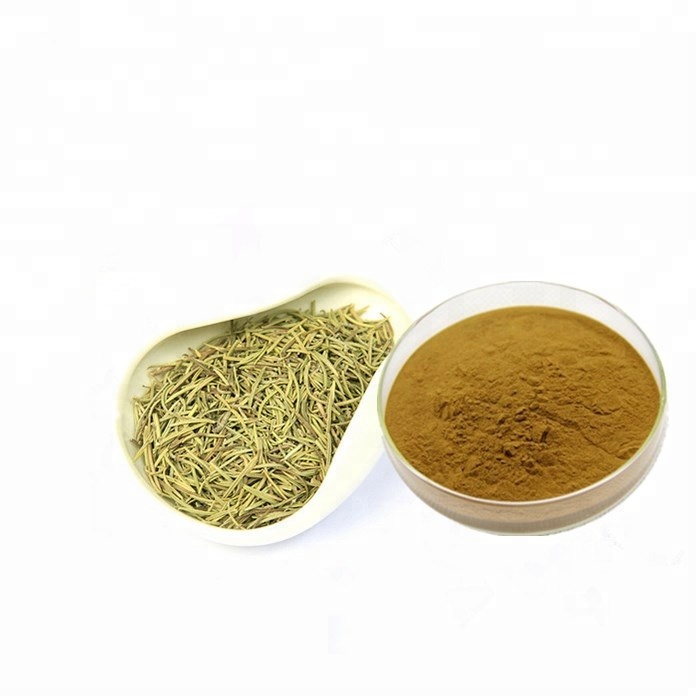
Ursolic acid looks like a white or pale yellow crystalline powder and has a pretty high melting point. It doesn’t dissolve in water, but it does dissolve in certain organic solvents like ethanol and chloroform.
Chemically speaking, UA has several chiral centers and unsaturated bonds. These structural features give it its unique chemical behavior and potential biological effects.
As for stability, UA holds up pretty well under normal conditions. But if you expose it to high heat, strong acids, or strong bases, its structure can change — and that might lower its biological activity.
Pharmacological Activities of Ursolic Acid
Ursolic acid (UA) shows a lot of interesting biological effects.
1. UA can fight tumors in several ways — mainly by slowing down tumor cell growth and spread. For example, UA can trigger cancer cells to self-destruct by affecting proteins like those in the Bcl-2 family.[2] It can also help prevent tumors from invading other tissues by interfering with how they move and interact with their surroundings.
2. UA has anti-inflammatory benefits. It lowers the release of key inflammatory molecules like TNF-α and IL-6, which helps calm down inflammation.
3. UA also works against certain bacteria and viruses, making it useful for fighting infections.
4. For heart health, UA appears to be protective — it may help lower the risk of heart disease or slow its progression.
5. When it comes to the liver, studies in mice show promising results.[3] Feeding mice a high-fat diet along with UA (at levels like 0.125%, 0.25%, or 0.5%) actually reversed liver fat buildup and damage caused by the unhealthy diet.
Read more: What Is Ursolic Acid Used For
Wide Applications of Ursolic Acid
Given its broad pharmacological activities, UA plays an important role in multiple fields.
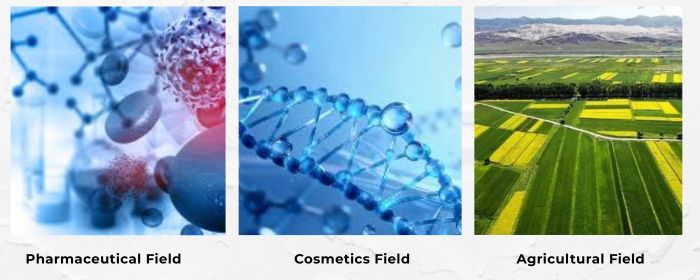
Ursolic Acid in the Pharmaceutical Field
Given its range of pharmacological actions, ursolic acid (UA) has several promising uses in the pharmaceutical field.
UA can be formulated on its own into products like capsules or tablets to treat inflammatory conditions, or used alongside other therapies in cancer treatment.
UA also serves as a valuable starting point for creating new drugs. Researchers often modify its chemical structure — for example, by adding ester or sugar groups — to boost its activity and how well the body can absorb it. These tweaks can lead to more effective medicines with better treatment outcomes.
Ursolic Acid in the Cosmetics Field
In cosmetics, ursolic acid (UA) is getting noticed for its antioxidant and anti-inflammatory benefits. You can find it in skincare products aimed at fighting signs of aging.
UA's antioxidant action helps neutralize free radicals in the skin, which means less damage to skin cells and fewer wrinkles and dark spots. At the same time, its anti-inflammatory effect helps calm skin down — great for sensitive skin or breakouts like acne.
Thanks to these perks, skincare products with UA have a real advantage in the market.
Ursolic Acid in the Agricultural Field
In agriculture, ursolic acid shows some real promise, too. It works against bacteria, viruses, and even pests, which could make it a natural option instead of synthetic pesticides.
For example, it can help stop certain plant diseases, keeping crops healthier. When it comes to pest control, UA can mess with bugs' growth and reproduction, cutting down on crop damage, which opens up some interesting possibilities for more sustainable farming.
Conclusion
To sum it up, ursolic acid is a versatile natural compound with potential across various fields. As we learn more about where it comes from, how it's made, and what it can do, it's likely to bring even more benefits to human health and various industries down the road.