
Hyaluronic acid (HA) is a natural sugar that's everywhere in medicine and beauty these days. You probably know it as that superstar ingredient in your skincare products or dermal fillers—the one famous for holding onto water like crazy. But it's also a big deal in things like joint injections and eye surgeries. No matter where it's used—whether plumping up your skin, filling in soft tissue, or helping with creaky knees—its effectiveness all comes down to one thing: how well it can hold its structure and keep working, either inside your body or sitting on a shelf.
Here's the catch though. Natural hyaluronic acid doesn't last very long. Once it's in your body, enzymes go after it and break it down, plus free radicals don't do it any favors either. So how do scientists get it to stick around longer and keep working? Turns out, they've got three main tricks up their sleeves: crosslinking the molecules, adding antioxidants, and making tiny chemical tweaks.
1. Crosslinking
Think of natural hyaluronic acid molecules like loose, flimsy threads—super easy for enzymes to shred. To beef them up, scientists use something called chemical crosslinking. They bring in small molecules like BDDE (try saying that five times fast—it's short for 1,4-butanediol diglycidyl ether) to act like little bridges between those loose hyaluronic acid chains. These bridges link everything together into a 3D mesh.
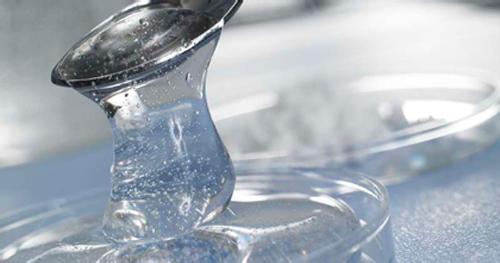
This whole network business makes the HA molecules way bigger and sturdier. Instead of being a runny liquid, it turns into more of a gel. And that gel can stand up to enzymes and physical wear-and-tear much better. This is exactly why crosslinked HA is what they use in those long-lasting fillers—the ones that keep working for months after you get injected.
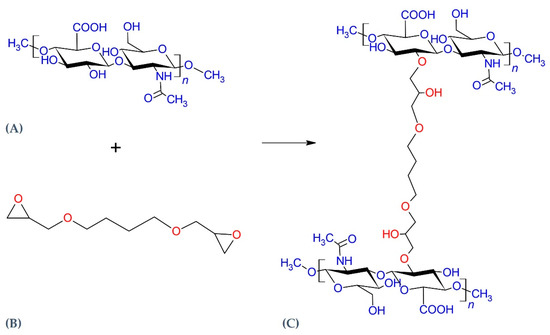
Fig 1. hyaluronic acid Crosslinking with 1,4-butanediol diglycidyl ether[1]
2. Antioxidant Protection
Enzymes aren't the only troublemakers. Free radicals—those annoying little molecules your body makes naturally—love to attack hyaluronic acid and chop it up too.
That's where antioxidants come in. You'll find them added to some HA products—ingredients like vitamin C, vitamin E, glutathione, or even sorbitol (yep, the same stuff used as a sweetener). These guys act like bodyguards. They jump in front of free radicals first, taking the hit themselves so the HA molecules stay safe. Think of it as active defense. With antioxidants on patrol, HA can hold up longer, whether it's working inside you or just sitting in its bottle.
3. Gentle Chemical Tweaks
Then there’s a more delicate approach—instead of heavy-duty crosslinking, scientists sometimes just give HA molecules a tiny chemical nudge to make them tougher.
Take NASHA technology, for example. NASHA stands for Non-Animal Stabilized Hyaluronic Acid. What they do here is use a very light, super-controlled chemical tweak (often still with BDDE, but just a smidge) to make the HA chains more resilient without messing up their natural structure or biocompatibility. It's like micro-crosslinking. You end up with something that's both safe and lasts way longer, which is why you see it used everywhere from doctor's offices to high-end skincare.
Bottom Line
So there you have it. Making hyaluronic acid last longer isn't magic—it's smart science. It takes crosslinking to build a solid molecular network, antioxidants to fight off free radicals, and just the right chemical tweaks to strengthen things at the tiniest level. Thanks to all these clever innovations, hyaluronic acid has gone from being this fragile natural sugar that disappears fast to a real workhorse ingredient that keeps delivering—whether it's helping us look younger or just move better.
Related Articles:
Solubility: A Pillar of Science, Technology, and Daily Life
How to Maintain the Stability of Hyaluronic Acid Products