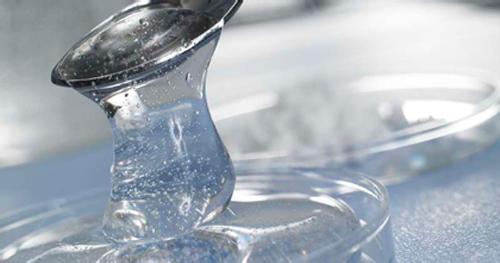

Xanthan gum is a thickening, suspending, emulsifying, and stabilizing agent. For this reason, it is employed in various applications, ranging from food and personal care to chemicals and pharmaceuticals.
What Xanthan Gum Does in Food
Xanthan gum is known as one of the best bio-based gums available. Many countries have approved it as a food ingredient.
1. A 1% xanthan gum solution is about 100 times thicker than a gelatin solution at the same concentration. In fruit juice drinks and concentrated juices, just 0.08% to 0.3% xanthan gum can keep fruit pulp suspended and prevent settling. In condiments like soy sauce, oyster sauce, and salad dressings, it fixes the settling problems you get with traditional starch thickeners, leaving the sauce smooth and uniform.
2. Xanthan gum prevents oil separation and water from separating. For an emulsion containing beans and protein, the addition of as little as 0.02% xanthan gum increases the emulsification process. This is the reason why xanthan gum is used in protein drinks and milk-based drinks.
3. Xanthan gum enhances frozen foods. In frozen food such as ice cream and popsicles, xanthan gum modifies the viscosity of the mixture to ensure that consumers get the required consistency, smoothness, and evenness. It also ensures that no large ice crystals form.
4. In ramen and instant noodles, xanthan gum toughens the dough, making it more resilient, hence reducing the number of broken noodle pieces.
5. Xanthan gum increases air bubble formation in baked foods and also helps retain moisture in products. It makes the product chewier and improves the shelf life.
6. Even meat products benefit from xanthan gum. One study showed that soaking beef in 0.5% xanthan gum improved its tenderness. How? Xanthan gum is believed to bind with the calcium ions, which activate enzymes responsible for muscle protein breakdown.

What Xanthan Gum Does in Personal Care Products
In personal care, xanthan gum is mainly used as a thickener and stabilizer. It improves texture, boosts stability, and keeps ingredients from separating.
You'll find it in all kinds of lotions and emulsions—things like milky lotions, sheet mask essences, and face creams. Adding xanthan gum makes the product feel smoother and spread more easily. It also improves elasticity, low-temperature flow, and storage stability.
On top of that, xanthan gum can actually benefit your skin. Its molecular structure holds onto water, forming a protective film on your skin that locks in moisture. That gives you a nice hydrating effect. Plus, the gel-like structure it forms when hydrated helps support skin cells, which may help reduce sagging and wrinkles.
High-transparency xanthan gum has opened up even more possibilities in cosmetics. While regular xanthan gum gives you a 1% solution with lower clarity, the high-transparency version has a light transmittance of over 90%. It thickens and stabilizes without messing up the clear, see-through look of products like transparent lotions and sheet mask essences.
What Xanthan Gum Does in Industrial & Chemical Products
Due to its distinctive features, xanthan gum can be widely used not only in food processing but also in industry. It is stable in the pH range of 1 to 12 and active within -18°C to 130°C. Moreover, it has resistance to salt and oxidants.
- Oil drilling: As a drilling fluid additive, xanthan gum demonstrates shear-thinning behavior, decreasing viscosity while the drill rotates fast to improve drilling. After stopping the flow, viscosity recovers to suspend rock cuttings and stabilize the borehole.
- Ceramics: Xanthan gum is utilized in the process of ceramics manufacturing as a binder and thickening agent for clay bodies.
- Water-based paints: It allows adjusting the product's viscosity, preventing sedimentation and ensuring its stability.
- Fire protection: In water-based fire-fighting compositions, xanthan gum increases the viscosity of solutions, thus making water stick more to burning surfaces.
- Textile printing: Xanthan gum serves as a thickener in a printing paste. Besides that, it creates a proper film and washes out easily from fabric. It can adjust ink flow properties in floor printing to create high-quality prints.
What Xanthan Gum Does in Pharmaceuticals
Xanthan gum is a common excipient in medicines. It's added to liquid, semi-solid, and solid drugs to thicken, help suspend particles, and emulsify.
In suspensions, just a small amount of xanthan gum prevents drug particles from settling, keeping the mixture uniform.
In sustained-release and controlled-release formulations, xanthan gum forms a gel that helps the drug release slowly, which extends how long it stays effective. And because it's stable across different pH levels, it works well in both the stomach and the intestines.
In topical products like creams and ointments, xanthan gum mainly thickens and stabilizes the formula, making the product easier to spread and nicer to use.
Is Xanthan Gum Safe?
Yes, xanthan gum's safety is widely recognized.
The FDA classifies it as Generally Recognized as Safe (GRAS). When you eat it, your body doesn't digest or absorb it. It passes right through unchanged, with no buildup or toxicity. Multiple toxicology studies have confirmed that it has no acute toxicity, no subacute toxicity, and no mutagenic effects.
That said, moderation matters. In cosmetics, if you add too much xanthan gum, the product becomes too thick and goopy, which could make it harder for your skin to absorb the beneficial ingredients.
Bottom line: xanthan gum is safe when used within the allowed limits. But as with anything, it's best to use it in reasonable amounts.
How to Use Xanthan Gum Properly
To obtain optimal performance of xanthan gum, follow these recommendations:
- Accurately weigh the ingredient. Its dosage ranges from 0.1% to 0.5%, depending on what you are preparing. Excess dosage makes the product too viscous and sticky.
- Use the correct method to incorporate. Gradually introduce the powder into your product while constantly mixing. In addition to warm liquids and utilization of a dispersion medium facilitates the incorporation process.
- Be careful with temperature. Overheating is detrimental to xanthan gum, since it causes breakdown of the polymer's macromolecular chain. The optimal temperature limit is 60°C (140°F), especially if you prepare bakery products or use milk.
- Prevent exposure to extreme pH conditions. If the substance comes in contact with acid or alkaline substances, degradation occurs. Do not allow pH to be lower than 3 or higher than 9.
Xanthan gum powder should be stored in a cool, dry, and ventilated place. Protect it from moisture to prevent caking once you open the package.
Conclusion
Xanthan gum is a versatile and reliable ingredient that's used across food, personal care, industrial, and pharmaceutical applications. Whether you need high-quality xanthan gum, one of its natural alternatives, or other specialty ingredients, Stanford Chemicals Company (SCC) has you covered.