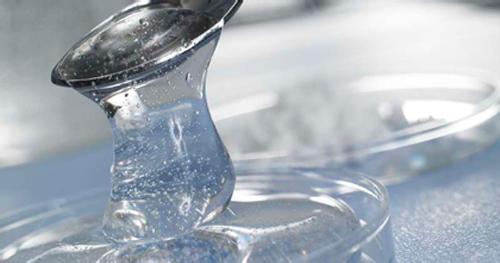

Hyaluronic acid (HA) is a natural polysaccharide found all over the human body—skin, joint fluid, eye vitreous, you name it. It's widely used in skincare, medicine, and medical aesthetics. But here's the thing: there are many different types of HA. Based on molecular weight, you've got high, medium, low, and oligomeric versions. Based on cross-linking, you have non-cross-linked, lightly cross-linked, and highly cross-linked. Different types vary a lot in how deep they penetrate, their bioactivity, how long they last, and what they're best used for. So there's no single "best" HA—it all depends on what you're trying to do. Drawing from years of working with customers, let's break down the best type of HA powder for six common use cases.
First, Let's Get Familiar with the Common Types of Hyaluronic Acid Powder
HA powder can be grouped by molecular weight and chemical modification:
- High-molecular-weight hyaluronic acid (>1,000 kDa) : Forms a moisturizing film on the skin's surface. Locks in moisture but can't penetrate the outer layer of skin.
- Medium-molecular-weight hyaluronic acid (100–1,000 kDa) : Offers both hydration and some penetration. Often used in fillers.
- Low-molecular-weight hyaluronic acid (<100 kDa) : Can penetrate into the deeper epidermis or even the dermis. Helps boost collagen production.
- Oligomeric hyaluronic acid (<10 kDa) : Has the strongest penetration. Can reach the dermis and repair photoaged skin.
- Cross-linked hyaluronic acid: Uses cross-linking agents to create a stable 3D network. Lasts much longer in the body. Mainly used for aesthetic fillers and long-acting drug delivery.
- Modified derivatives: Like acetylated, aminated, or cationized HA. Used to improve skin absorption or achieve targeted drug delivery.
Reading more:
Which Hyaluronic Acid Powder is Best for Skin?
For topical skincare, molecular weight determines how deep HA goes into your skin and how it works.
High-molecular-weight hyaluronic acid stays on the skin's surface, forming a viscoelastic film that reduces water loss. It gives you instant moisture-locking and is great for dry skin in dry seasons.
Low-molecular-weight HA can get past the stratum corneum into the deep epidermis or even the dermis. It hydrates from within and reduces fine lines. A 2011 clinical study looked at five molecular weights—50, 130, 300, 800, and 2000 kDa. The 50 and 130 kDa groups showed the most significant improvement in wrinkle depth, thanks to their better penetration.
But smaller isn't always better. Oligomeric HA can reach the dermis, but it's highly bioactive and might cause mild pro-inflammatory effects. If you have sensitive skin, be careful.
In fact, for topical skincare, a blend of multiple molecular weights works best. For example, a mix of high, medium, and low molecular weight HA gives you layered hydration. If you're making your own DIY skincare and can only pick one molecular weight, the safe bet is low-molecular-weight HA in the 50–130 kDa range.
Reading more: Does Low Molecular Weight Hyaluronic Acid Cause Inflammatory Reactions?
Which Hyaluronic Acid Powder is Best for Joints?
Hyaluronic acid is a major component of joint synovial fluid. As you age—or if you have osteoarthritis—the natural high-molecular-weight HA in your joints decreases, and the fluid's viscoelasticity drops. That leads to more joint friction and pain. Injecting HA into the joint has become a common treatment for knee osteoarthritis.
Studies give slightly different answers on the best molecular weight, but the overall trend is pretty consistent. A 2025 Bayesian network meta-analysis (Level I evidence) looked at data from 9,822 knee osteoarthritis patients. It found that ultra-high-molecular-weight (UHMW) and high-molecular-weight (HMW) HA gave the best pain relief six months after injection.
In clinical practice, commercial HA joint injections fall into two categories: high molecular weight and low molecular weight. High-molecular-weight HA stays in the joint for about six months, so the effect lasts longer. Studies also show it has extra pain-relieving effects on nerves, which is why doctors tend to prefer it. That said, some research suggests HA's ability to reduce synovial inflammation and restore fluid rheology works best in the 500–1,000 kDa range, and starts to drop off above 2,300 kDa.
For joint treatment, high-molecular-weight HA works best (typically above 1,500 kDa or in the 500–1,000 kDa range—follow your doctor's advice).
Reading more: Hyaluronic Acid VS. Glucosamine VS. Chondroitin: Which Is Best for Joints?
Which Hyaluronic Acid Powder is Best for Medical Aesthetics (Fillers)?
In medical aesthetics, hyaluronic acid is mainly used for facial fillers. The key factor here isn't just molecular weight—it's cross-linking. Cross-linking connects HA chains into a 3D network, which makes the filler last longer in the body and gives the gel different levels of hardness and support.
Cross-linked hyaluronic acid is the go-to for aesthetic fillers. Depending on cross-linking density and particle shape, you have monophasic gels and biphasic particle fillers. Monophasic gels are smooth, inject easily, and don't migrate much. They're good for soft tissue areas like cheeks and forehead. Biphasic fillers offer more support and are better for nose augmentation, chin augmentation, and deep nasolabial folds.
Different areas of the face call for different molecular weights:
- Under-eye hollows (tear troughs): Low molecular weight (20–30 kDa), low cross-linking (≤4%)
- Nasal base: Medium molecular weight (500–800 kDa), medium cross-linking (6–8%)
- Neck lines: Low molecular weight (50–100 kDa), low cross-linking (3–5%)
Which Sodium Hyaluronate Powder is Best for Eyes?
Sodium hyaluronate eye drops (also called hyaluronate eye drops) are one of the most widely used treatments for dry eye worldwide. For eye applications, high-molecular-weight HA has clear advantages.
On a healthy eye surface, natural hyaluronic acid in tears has high viscoelasticity and anti-inflammatory properties. Recent eye research clearly shows that high-molecular-weight HA (HMW HA) has significant benefits over low-molecular-weight HA. HMW HA holds onto water better, extends tear film break-up time, and resists environmental dryness. It also has strong anti-inflammatory effects, while low-molecular-weight HA may actually trigger inflammation.
In practice, sodium hyaluronate eye drops usually use high-molecular-weight HA around 1,000 kDa. More advanced products, like Hyalein® 0.2, use HA with a molecular weight of 2–3 million kDa.
Which Hyaluronic Acid Powder is Best for Wound Healing?
HA plays multiple roles in wound healing: keeping the environment moist, regulating inflammation, and promoting cell growth and migration. That's why it's a great material for wound dressings. Different molecular weights perform a bit differently.
One animal study compared PVA/HA hydrogel dressings made with high-molecular-weight HA (about 4,800 kDa) versus low-molecular-weight HA (about 52 kDa). The results: both HA-containing dressings healed wounds faster than regular gauze or plain PVA dressings. The high-molecular-weight HA group showed slightly better healing, but the difference wasn't statistically significant. That suggests HA's wound-healing benefits come mainly from its bioactivity—promoting cell growth and providing a moist environment—and molecular weight plays a secondary role.
For wound healing, high-molecular-weight HA is slightly better than low, but a dressing with multiple molecular weights might give you the most comprehensive benefits.
Which Hyaluronic Acid Powder is Best for Drug Delivery?
Drug delivery is where HA really shines in cutting-edge biomedical research.
Different molecular weights play different roles in drug delivery:
- Low-molecular-weight HA (especially ≤8 kDa) : Great penetration. Works as a skin penetration enhancer to help drugs get past the stratum corneum.
- Medium-molecular-weight HA: Often used to build amphiphilic polymers. The main chain is hydrophilic HA (which actively targets CD44 receptors), and side chains are hydrophobic groups. These self-assemble into nanoparticles that carry drugs and enter target cells via receptor-mediated endocytosis.
- High-molecular-weight HA: Forms 3D hydrogel networks with good stability and sustained-release properties. Good for long-acting drug delivery and cell scaffolds.
Chemical modifications open up even more possibilities. For example, adding amine groups to the HA backbone (HA-NH₂) allows covalent drug attachment and controlled release. It also lets you attach fluorescent dyes to track drug delivery in real time.
There's no single "best" HA powder for drug delivery—it depends on the route and target:
- Transdermal delivery: Low-molecular-weight HA (≤8 kDa) works best. Helps drugs cross the skin barrier.
- Injectable targeted delivery: Medium- or high-molecular-weight HA derivatives (like amphiphilic polymers or aminated HA) are best. They offer both targeting and sustained release.
- Oral delivery systems: High-molecular-weight HA microspheres or protein complexes are a hot research area. They help improve the oral bioavailability of drugs.
Reading more: Sodium Hyaluronate Coating for Drug Delivery
Conclusion
The "best" HA powder depends entirely on what you're using it for. Here's a quick summary table based on the discussion above:
|
Application |
Best Choice |
|
Topical skincare |
Multi-molecular-weight blend |
|
Joint treatment |
High molecular weight |
|
Aesthetic fillers |
Cross-linked HA |
|
Eye care |
High molecular weight |
|
Wound healing |
High molecular weight (slightly better) or blended dressings |
|
Drug delivery |
Low molecular weight or modified derivatives |
So when you're choosing an hyaluronic acid powder product, first figure out what you want to accomplish, then pick the molecular weight and type accordingly. If you have more questions about choosing the right HA for your application, feel free to reach out to us directly. Send Us an Inquiry.