
Salicylic acid and hyaluronic acid are two heavy hitters in skincare. The first is famous for controlling oil and fighting breakouts. The second is known for hydrating and repairing skin. There's just one problem: salicylic acid works best at a pH of 3–4, but hyaluronic acid breaks down under those same acidic conditions. And if you go neutral or alkaline, the negative charges on both ingredients push them apart, so they can't work together. This has been a headache for formulators for years, and it's held back product development for oily-sensitive skin.
Recently, breakthroughs in ion complexation and encapsulation technology have offered a way out.
Salicylic Acid and Hyaluronic Acid
Oily-sensitive skin—a skin type that's both greasy and easily irritated—is becoming a major growth area in the skincare market. People with this skin type deal with T-zone shine, large pores, and breakouts, but also redness, a weak skin barrier, and sensitivity to harsh ingredients. Traditional oily-skin products focus on oil control but often leave skin dry and flaky. Traditional sensitive-skin products focus on repair but do nothing for oil. That gap in the market is a big opportunity for products that control oil without drying out the skin, and fight breakouts without wrecking the barrier.
Salicylic Acid and Hyaluronic Acid Line Up Perfectly With the Two Needs
Salicylic acid (SA) is a beta-hydroxy acid. It's oil-soluble, so it gets deep into pores to dissolve oil, reduce inflammation, and kill bacteria. That's why it's a go-to for blackheads, whiteheads, and acne. Hyaluronic acid (HA) is a water-based humectant that can hold up to 1,000 times its weight in water. It delivers deep hydration and helps repair the skin barrier.
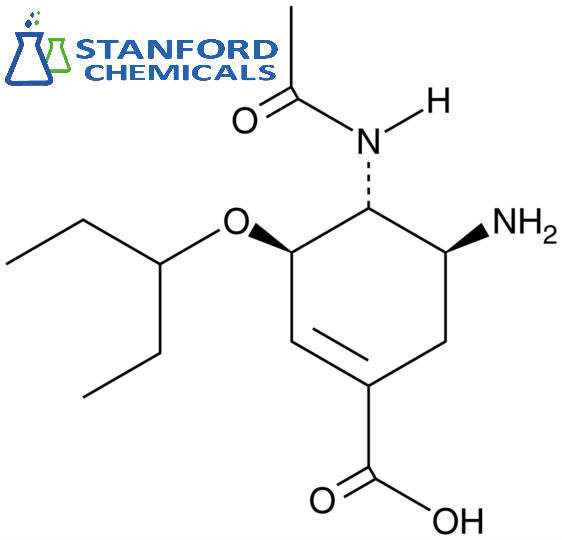
Capryloyl Salicylic Acid, CAS 78418-01-6 Low Molecular Weight 5-10 KDa
pH Clash Between Salicylic Acid and Hyaluronic Acid
But in a single formula, these two don't play nice. SA works best at pH 3–4. At that pH, HA breaks down—its chains snap, and it loses its ability to hydrate. If you raise the pH to neutral or slightly alkaline (5.5–6.5), where HA is stable, SA becomes ionized and can't penetrate the skin anymore.
The real kicker? At neutral or alkaline pH, the negatively charged salicylate ions and the negatively charged HA polyanions repel each other. They just won't mix.
Traditional formulas either kill SA's effectiveness or destroy HA's structure.
The Tech Breakthrough: Ion Complexation and Encapsulation
A 2024 study published in Gels uncovered the core mechanism: at pH 2.1, SA could be successfully loaded into a HA dry gel (up to 28% w/w).[1] But when the pH went above 7.4, electrostatic repulsion between the salicylate anions (SA⁻) and the HA polyanions meant almost no SA loaded at all.
So what's the takeaway? To make them coexist, you either protect HA at low pH or change the charge of one of them.
Comparison of Solutions
|
Approach |
How It Works |
Advantage |
|
Cyclodextrin inclusion |
SA fits into the hydrophobic cavity of cyclodextrin |
Protection, slow release, less irritation |
|
Ion complexation |
A cationic carrier forms a complex with HA |
Gets around the negative charge repulsion |
|
SA is permanently bonded into a polymer backbone |
Most stable; pH-triggered release |
Ion complexation is worth a closer look. This technology encapsulates SA inside submicron spheres. The outer shell is hydrophilic and positively charged, so it sticks to the skin's surface and slowly releases the acid. This system delivers the acid effectively while keeping the formula at a skin-friendly pH.
Formulation Example
Here's a sample formula framework that balances current technology and cost:
|
Phase |
Ingredient Category |
Suggested Raw Material |
Amount (%) |
Function |
|
A |
Water |
Deionized water |
q.s. to 100 |
Solvent |
|
A |
Humectant |
Glycerin, butylene glycol |
5–10 |
Hydration, solubility aid |
|
A |
Hyaluronic acid |
Low MW HA (≤50 kDa) |
0.1–0.5 |
Hydration, film-forming |
|
A |
pH adjuster |
Citric acid/sodium citrate |
q.s. |
pH 5.5±0.3 |
|
B |
Encapsulated SA |
Cyclodextrin complex or microspheres |
0.5–1.0 |
Acne treatment, oil control |
|
B |
Thickener |
0.1–0.3 |
Suspension stability |
|
|
C |
Preservative |
Phenoxyethanol/ethylhexylglycerin |
0.5–1.0 |
Preservation |
|
D |
Soothing ingredients |
0.1–0.5 |
Reduce irritation |
Tips
When developing your formula, watch out for these common issues:
- Don't mix high-concentration SA with high-MW HA directly. High-MW HA degrades more easily at low pH and tends to interact with SA. Go with low-MW HA (≤50 kDa)—it handles acid better.
- Watch out for cationic ingredients. If you go the ion complexation route, remember that cationic surfactants can precipitate with anionic thickeners like carbomer.
- Choose your preservative system carefully. HA is a breeding ground for microbes. Make sure your preservative system is broad-spectrum, and avoid preservatives that might interact with the encapsulation (like certain quaternary ammonium compounds).
- Test stability across a pH range. Test stability from pH 4.5 to 6.5. Monitor SA release (using HPLC) and HA molecular weight changes (using GPC).
Final Thoughts
There's a real gap in the market for oily-sensitive skin products. Traditional oily-skin lines focus on oil control but often cause dryness and peeling. Sensitive-skin repair lines don't do anything for oil. The first brand to launch a formula that successfully combines salicylic acid and hyaluronic acid could own that category.
For raw materials, consider cyclodextrin-encapsulated SA powder plus low-MW sodium hyaluronate powder. The physical separation and pH-responsive design are the technical foundation for a product that controls oil without drying and fights breakouts without wrecking the barrier.