
Creatine is a natural compound found in your body. It's mainly made in the liver, kidneys, and pancreas. Your body needs about 1 gram of creatine per day to function normally. About half of that is made naturally, and the other half needs to come from food. Creatine is mostly found in animal-based foods like red meat and fish. If you don't eat much meat, your creatine levels might be less than ideal.
What Does Creatine Do?
The main job of creatine is to help with energy production in your cells. In your muscles, creatine turns into phosphocreatine, which donates a phosphate to ADP to quickly regenerate ATP. [1] This process gives your muscles a quick burst of energy, which is great for high-intensity activities like sprinting or lifting weights.
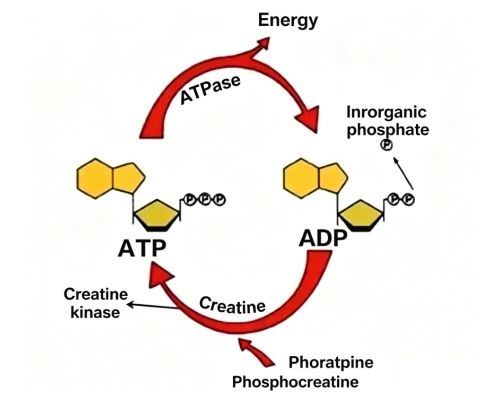
Fig 1. Creatine and energy metabolism
A number of studies show that taking creatine along with resistance training can significantly boost muscle strength in both your upper and lower body. Plus, research suggests creatine may also have positive effects on fat tissue, helping increase energy expenditure and improving overall metabolism.1
Do You Need Extra Creatine?
For most healthy people who eat meat and fish regularly, creatine levels are usually fine. But some people might want to think about supplementing:
- Vegans and vegetarians – Since they don't eat animal products, their muscle creatine stores are often 10–20% lower than in meat-eaters.
- Athletes who train hard – They need more creatine due to intense workouts.
- Older adults – As you age, creatine levels in your muscles can drop by 15–20%.[2]
If you fall into any of these groups, taking creatine might help improve your physical performance and even brain function.
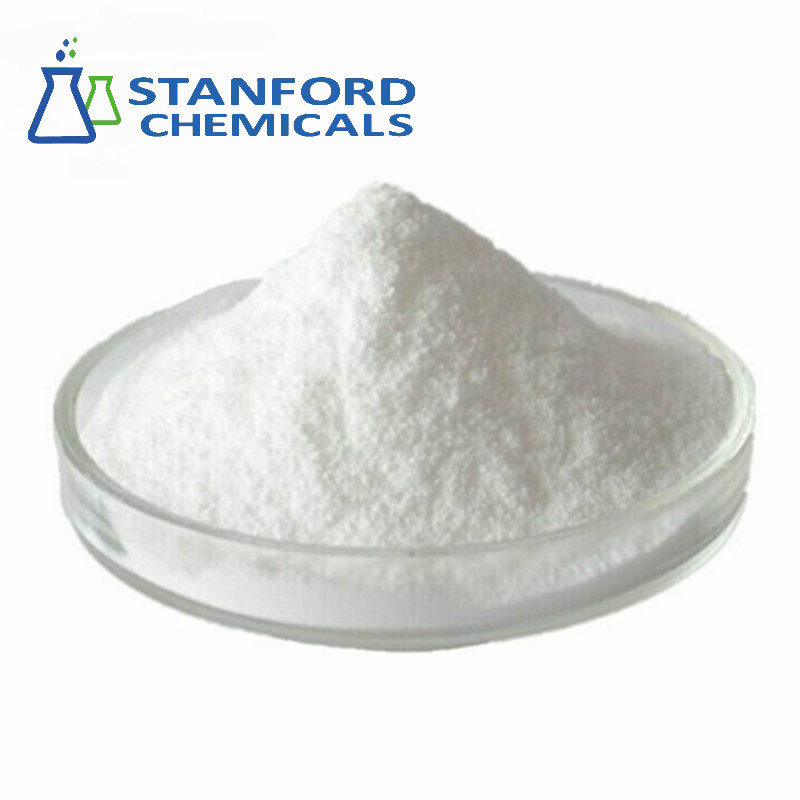
Stanford Chemicals Company offers high-purity bulk creatine powder and creatine monohydrate powder.
Does Creatine Have Side Effects on the Kidneys?
This is one of the most common concerns. Current research shows that for people with healthy kidneys, taking regular doses of creatine doesn't cause harm. A large study based on U.S. National Health and Nutrition Examination Survey data found that creatine from food was actually linked to lower levels of serum cystatin C – meaning creatine didn't increase kidney strain and even appeared safe for people with kidney issues. [3] But if you already have kidney problems or are taking meds that could affect your kidneys (like some NSAIDs), talk to your doctor before starting creatine.
Creatine for Men and Women
Creatine works for both men and women, but results might differ. One meta-analysis of adults under 50 found that men had significant gains in upper and lower body strength when combining creatine with resistance training. For women, though, the gains weren't statistically significant.
That doesn't mean creatine doesn't work for women – it's likely because there haven't been enough women in studies so far. Interestingly, creatine levels in women can fluctuate during different phases of their menstrual cycle, and supplementing may help ease fatigue during the follicular phase and early luteal phase.
Creatine for People Who Don't Work Out
You don't have to be a gym-goer to benefit from creatine. Its effects go beyond athletic performance. Research suggests creatine may help with:
- Preventing muscle loss from aging or illness
- Supporting brain energy metabolism and reducing nerve damage, which could help with neurodegenerative diseases
- Improving exercise tolerance in people with heart disease
- Boosting energy metabolism in those with chronic fatigue syndrome
Just keep in mind that these benefits tend to be bigger when creatine is combined with some form of exercise or rehab.
Creatine for Healthy Aging
Older adults are a key group that may benefit from creatine. As we age, we lose muscle mass and bone density – a condition sometimes called "sarcopenia-osteopenia" – which raises the risk of falls, fractures, and frailty. Studies show that when older people take creatine alongside exercise, they experience greater improvements in lean body mass, lower-body muscle density, bone structure, and upper-body strength than with exercise alone.
When it comes to brain function, creatine boosts phosphocreatine levels in the brain, which can help improve memory and how fast you process tasks. In older adults, taking creatine has been shown to improve performance on long-term memory tasks significantly. Creatine also helps your body use glucose more efficiently and improves insulin sensitivity, which can help with blood sugar control and hemoglobin A1c levels. Creatine is good for heart health too. It helps your heart use energy more efficiently, improves heart muscle function, and may even benefit people with heart failure.
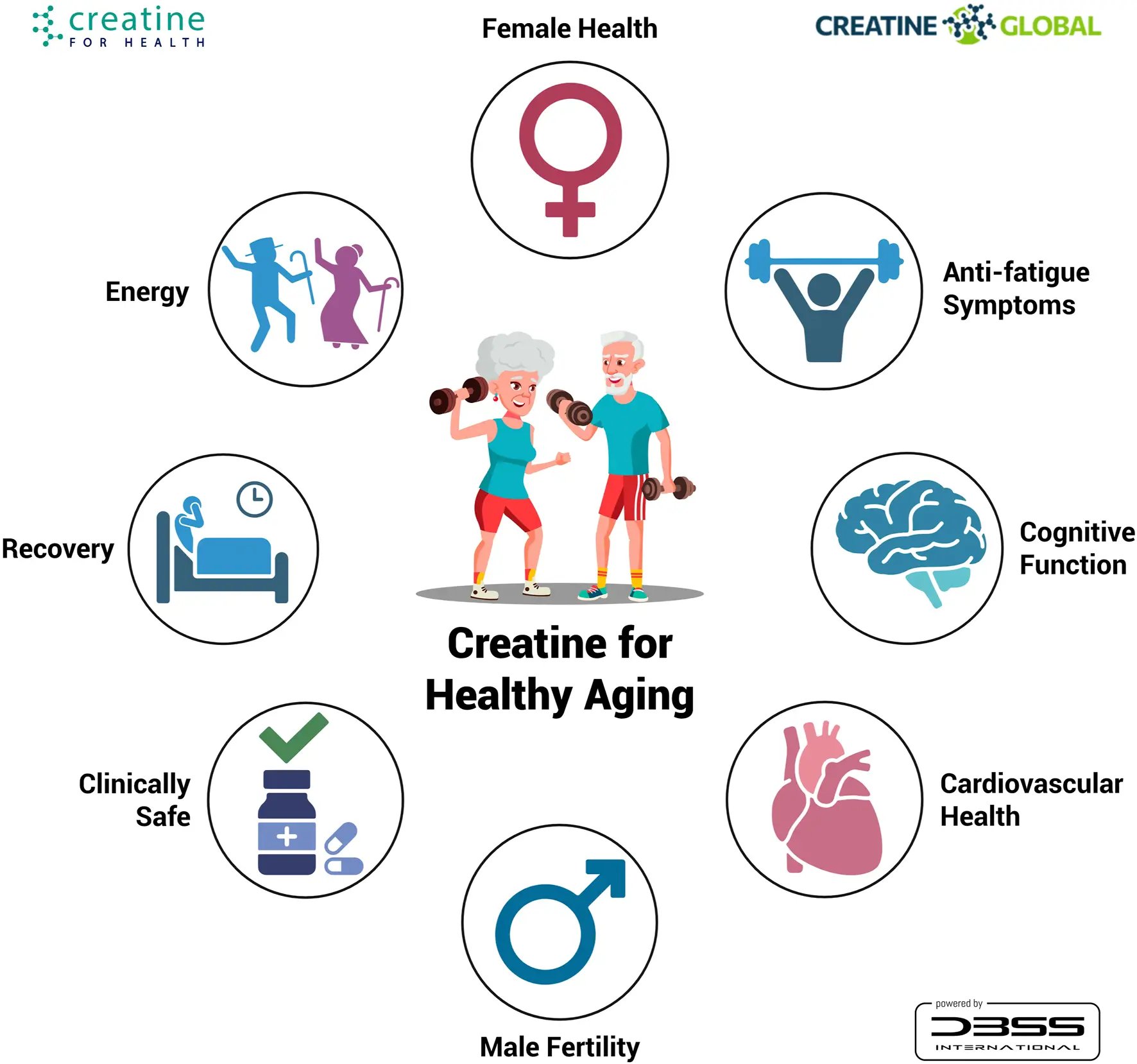
Fig 2. Benefits of creatine monohydrate supplementation plus resistance training in older adults.[4]
Creatine Powder for Sale
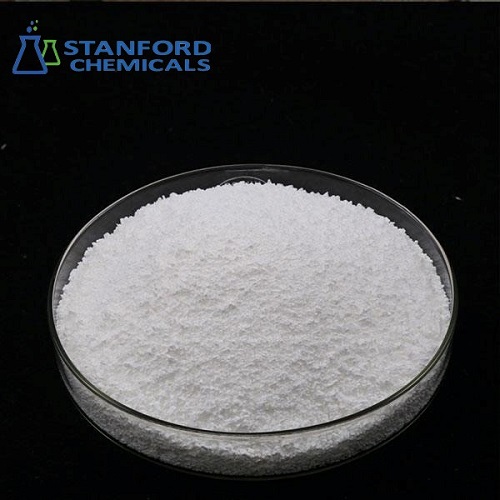
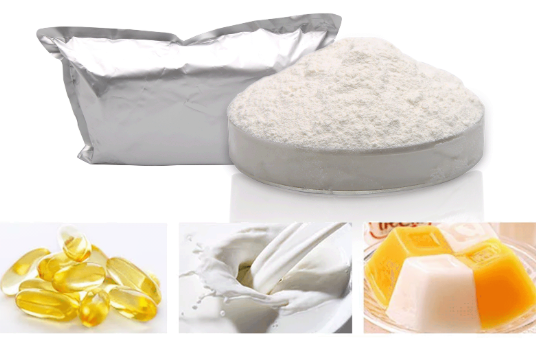
The most common form you'll find is creatine monohydrate powder. It's cheap, absorbs well, and is the type used in most studies.
When using creatine powder, here's what to do: mix it into water or juice and take 3–5 grams per day.
A popular method is to start with a "loading phase" – take 20 grams a day (split into 4 doses) for 5–7 days, then switch to a "maintenance phase" of 3–5 grams a day. But just taking 3–5 grams every day from the start works fine too.
Taking it with a carb-based drink may help your body absorb it better. Try not to take it with a lot of caffeine, since that might weaken its effects.
Creatine powder is usually white, tasteless, and dissolves pretty well. If it upsets your stomach, you can split up your doses or take it with a meal.
Stanford Chemicals Company offers high-purity bulk creatine powder and creatine monohydrate powder.