
Pain can come from different causes, such as nerve injury, inflammation, joint wear, or problems inside the body. Many people use painkillers to feel better, but scientists are still looking for new drugs that work in other ways.
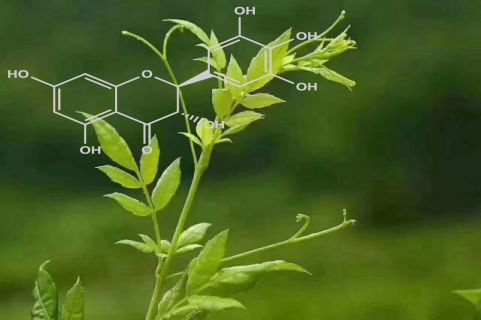
L‑Tetrahydropalmatine or L‑THP is an alkaloid found in plants of the genus Corydalis. People have taken a look at L‑THP because it affects the brain and may help with pain.
Studies show that L‑THP can touch on pain signals by working with dopamine receptors and other brain pathways. Researchers have also tested L‑THP for nerve pain, inflammatory pain, and other kinds of pain.
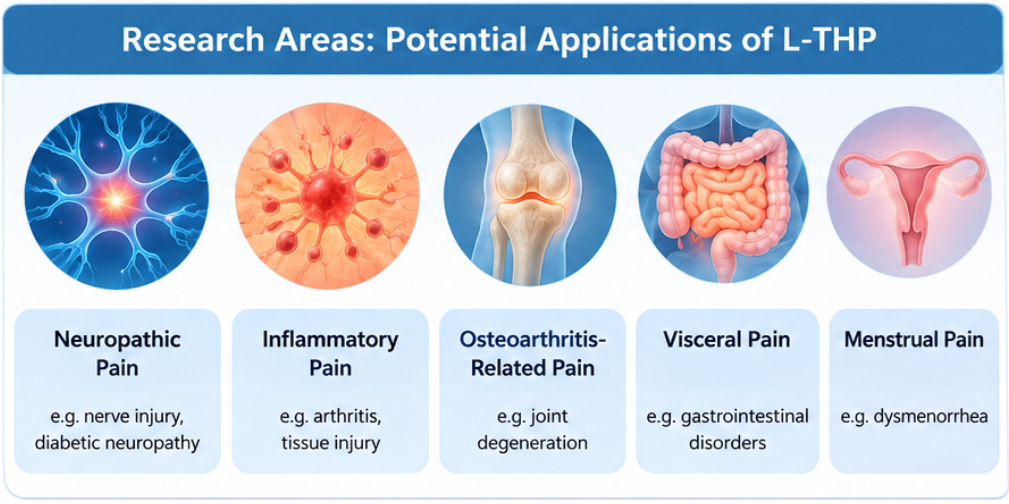
L-Tetrahydropalmatine for Neuropathic Pain Relief
Neuropathic pain happens when the nervous system is injured or not working properly. Common causes include diabetes, pressure on nerves, chemotherapy, and physical injuries to nerves. People who have this kind of pain often feel burning, tingling, shocks like electric currents or pain from things that normally don’t hurt, such as light touch.
L-THP has shown promise in studies on neuropathic pain. A study from 2016 published in NeuroReport looked at L-THP in mice with neuropathic pain. The researchers created nerve-related sensitivity by using nerve ligation. The results showed that L-THP helped reduce sensitivity to touch. The effect depended on the dose. It was linked to dopamine D1 receptor activity.
Another study, published in Phytomedicine in 2023 studied L-THP in a model of constriction injury. This research found that L-THP reduced both thermal hypersensitivity. The scientists also discovered a way it works. It may act through the Clec7a-MAPK/NF-κB-NLRP3 inflammasome pathway, which is involved in inflammation in the system.
These results suggest that L-THP could be useful in studying pain, especially when abnormal nerve signals and brain inflammation are present. It is important to remember that all these findings come from animal studies. More research in humans is needed to understand if L-THP is safe and effective for people with pain.
L-Tetrahydropalmatine for Inflammatory Pain Relief
Inflammatory pain happens when tissue is injured, when there is an infection, or when other inflammatory processes start to affect the nerves that sense pain.
This kind of pain often happens with conditions like arthritis when there is tissue damage and with some types of diseases.
Inflammatory mediators, such as tumor necrosis factor-alpha (TNF-α) and interleukin-1 beta (IL-1β) can make the body more sensitive to pain.
Studies show that tetrahydropalmatine might affect the way the body deals with inflammation and with pain in the nervous system.
In a study from 2021 scientists looked at THP in rats that had pain caused in the lab. The treatment helped reduce the pain behaviors and stopped the activity of cells in the spinal cord. It also lowered the levels of TNF-α and IL-1β.
Another study from 2016 in the journal NeuroReport showed that L-THP helped reduce the sensitivity to touch in a mouse model of long-term inflammation.
These results suggest that L-THP might work on pain by affecting both the way the brain handles pain and the way the body deals with inflammation.
It is important to know the difference between THP and L-THP when looking at these results. Not all studies use the levo-isomer so findings, from general THP research should not be assumed to apply to L-THP.
L-Tetrahydropalmatine for Osteoarthritis-Related Pain Relief
Osteoarthritis (OA) is a condition that affects the joints and is marked by changes in the cartilage that covers the ends of bones the bone beneath the cartilage and the tissues around the joint.
As the condition gets worse people might feel joints, swelling and pain when they move. Inflammation inside the joint can also make the pain worse.
New studies have looked into whether tetrahydropalmatine can have an effect on these changes.
A study from 2026 that was published in Chemical Biology & Drug Design looked at THP in a mouse model of osteoarthritis. The scientists found that THP helped reduce pain behaviors and damage to cartilage that happens with OA.
The idea is that THP works by stopping a pathway involving KDM4A/MDM2/HIF-1α and by lowering the presence of M1 macrophages, which are linked to inflammation.
This research shows a path for more research on THP and osteoarthritis.
It is important to remember that the study looked at THP and not the isolated form of L-THP. There is still no evidence, from studies to support this.
Besides L-THP, the following compounds can also be used to relieve osteoarthritis-related inflammatory pain.
Sodium Hyaluronate, Chondroitin Sulfate, and Glucosamine: Hyaluronic Acid VS. Glucosamine VS. Chondroitin: Which Is Best for Joints?
L-Tetrahydropalmatine for Visceral Pain Relief
Visceral pain originates from internal organs, including the stomach, intestines, bladder, and reproductive organs.
Unlike pain arising from the skin or muscles, visceral pain is often difficult to localize. It may feel like cramping, pressure, or deep abdominal discomfort.
Researchers have investigated tetrahydropalmatine for its potential effects on visceral pain signaling.
A 2011 study published in Pharmacology, Biochemistry and Behavior examined the antinociceptive effects of DL-tetrahydropalmatine in rats.
The researchers used experimental models of persistent visceral and somatic pain. The results indicated that DL-THP could reduce certain pain-related responses.
This study provides preliminary evidence that tetrahydropalmatine may influence visceral pain processing.
However, the research used DL-THP rather than isolated L-THP. It therefore does not establish the specific analgesic effects of L-THP on visceral pain.
There is also insufficient clinical evidence to conclude that L-THP can treat gastrointestinal diseases such as irritable bowel syndrome, gastritis, or inflammatory bowel disease.
Further research is needed to determine whether its effects on visceral pain can translate into practical therapeutic applications.
L-Tetrahydropalmatine for Menstrual Pain (Dysmenorrhea) Relief
Dysmenorrhea refers to painful menstrual cramps, usually caused by uterine contractions and changes in local inflammatory mediators.
During menstruation, increased prostaglandin production can stimulate stronger uterine contractions and contribute to pain.
Tetrahydropalmatine has been investigated as one of the active components in traditional herbal preparations used in research on menstrual pain.
A study published in 2013 examined Yuanhu-based pain-relieving preparations in a rat model of primary dysmenorrhea. The researchers investigated tetrahydropalmatine and other compounds, including imperatorin.
The results suggested that these compounds influenced inflammatory responses, oxidative stress, and uterine contraction-related pathways.
However, the findings came from a combination of compounds and animal experiments. They do not establish that isolated L-THP can independently relieve menstrual pain in humans.
This distinction is important when evaluating the potential of L-THP as a research compound for reproductive and gynecological pharmacology.
Conclusion
L-Tetrahydropalmatine has attracted research interest for its potential analgesic effects across several pain-related conditions.
Current preclinical studies provide evidence of activity in neuropathic and inflammatory pain models. Research involving tetrahydropalmatine has also explored osteoarthritis-related pain, visceral pain, and dysmenorrhea.
However, the evidence is not equally strong across these applications. Some findings involve isolated L-THP, while others involve general THP or multi-component herbal preparations. Most of the evidence remains preclinical.
For researchers investigating pain modulation, neuropharmacology, and inflammation, L-THP offers an interesting compound for further study.
Stanford Chemicals provides specialty chemical materials for research and industrial applications. For L-Tetrahydropalmatine sourcing, researchers can contact our team to discuss product specifications, available analytical documentation, and material requirements.
FAQs
1. What types of pain have been studied in relation to L-THP?
Research has investigated L-THP in neuropathic and inflammatory pain models. Related THP research has also explored osteoarthritis-associated pain, visceral pain, and dysmenorrhea. Most findings are from preclinical studies.
2. Does L-THP work by blocking dopamine D2 receptors?
L-THP has been reported to act as a dopamine D2 receptor antagonist and a partial agonist of D1 receptors. Both pathways may contribute to its analgesic activity, although the exact mechanisms are not fully established.
3. Can L-THP relieve osteoarthritis pain?
Preclinical research has investigated THP in animal models of osteoarthritis, with findings suggesting reduced pain-related behaviors and inflammation. However, clinical evidence for isolated L-THP in human osteoarthritis is insufficient.
4. Is L-THP the same as tetrahydropalmatine?
L-THP is a specific levo-stereoisomer of tetrahydropalmatine. The broader term THP may refer to different stereochemical forms, including the racemic mixture. Researchers should confirm the chemical identity and stereochemical composition before purchasing.
5. Is L-THP approved for treating chronic pain?
The available research does not establish L-THP as an approved treatment for the pain conditions discussed in this article. Its potential analgesic applications remain an area of pharmacological investigation.