
Because of differences in purity and quality levels, different grades of hyaluronic acid serve very different purposes. This article dives into four key grades, Medical grade, medical device grade, injectable grade, cosmetic grade, and food grade, to help you understand what each one brings to the table and where they're best used.
The Four Grades of Hyaluronic Acid
Hyaluronic acid (HA) is categorized into different application grades based on purity standards, molecular weight control, sterility requirements, and manufacturing processes. Generally speaking, medical-grade HA has the tightest requirements for purity, sterility, and biocompatibility. Cosmetic grade focuses more on hydration performance and user experience. Food grade prioritizes solubility and safety.
The core differences between grades come down to purity standards, sterility requirements, molecular weight control precision, and production methods. Let's break down each of the four main grades.
Medical Grade Hyaluronic Acid
Medical-grade HA meets strict purity and biocompatibility standards. It's typically produced through microbial fermentation and offers excellent viscoelasticity and lubrication properties. In medical applications, it divides into two main categories: topical-use and medical device grade.
1) Medical Grade HA
Medical-grade HA is extremely common in over-the-counter medical products like eye drops and contact lens solutions. All such products must comply with strict pharmacopoeia standards to ensure safety and effectiveness.
Key Characteristics:
- High purity (extremely low protein content)
- Strict sterility requirements
- Bacterial endotoxins controlled to very low levels
- Must pass biological evaluation testing
Primary Applications:
- Eye drops (as a lubricating and moisturizing ingredient)
- Contact lens care solutions
- Topical drug formulations (for wound healing)
- Oral preparations (for certain digestive system conditions)
2) Medical Device Grade HA
Medical device-grade HA has even tighter purity requirements than standard medical grade and is used in devices that come into direct contact with human tissue. Compared to medical grade, medical device grade requires a more comprehensive set of tests, including intrinsic viscosity, weight-average molecular weight and molecular weight distribution coefficient, quaternary ammonium salt residues, and sulfated glycosaminoglycan testing.
Key Characteristics:
- Higher purity and stricter quality control
- More comprehensive biological evaluation requirements
- Tested against medical device industry standards like YY/T 0308-2015 and YY/T 1571-2017
Primary Applications:
- Topical wound healing preparations
- Cavity lubricants
- Drug delivery carriers
- Ophthalmic viscoelastics (used in cataract surgery, etc.)
- Soft tissue fillers
- Anti-adhesion barriers (preventing tissue adhesions after surgery)
- Membrane preparations (tissue engineering scaffolds)
Injectable Grade Hyaluronic Acid
Injectable-grade HA shares similarities with Medical grade but comes with even more stringent safety and stability standards. It's the industry standard in aesthetic medicine.
Key Characteristics:
- Highest-level sterility requirements (Sterility Assurance Level of 10⁻⁶)
- Extremely low bacterial endotoxin limits
- Must pass specialized tests like hemolytic streptococcus hemolysin testing
- Often cross-linked to extend residence time in the body
Product Categories:
- Injectable-grade raw materials
Primary Applications:
- Facial fillers and lip augmentation (aesthetic medicine)
- Treatment of knee osteoarthritis and general osteoarthritis
- Treatment of frozen shoulder and other joint conditions
- Ophthalmic viscoelastics (premium ophthalmic surgeries)
- Anti-adhesion barriers (used after complex surgeries)
Injectable grade has more rigorous sterility assurance requirements and typically must be manufactured in GMP (Good Manufacturing Practice) facilities. For individuals with sensitive skin, a patch test is recommended before use.
On Cross-Linking Technology: Modern cross-linking technologies—such as BDDE cross-linking—undergo rigorous purification processes that keep residual cross-linker levels below 0.1 ppm, fully compliant with international safety standards.
Cosmetic Grade Hyaluronic Acid
Cosmetic-grade HA has become a star ingredient in skincare products, thanks to its exceptional moisturizing and film-forming properties.
Key Characteristics:
- Must comply with standard QB/T 4416-2012 for cosmetic-grade sodium hyaluronate
- Available in high-molecular-weight, medium-molecular-weight, low-molecular-weight, and oligomeric HA based on molecular weight
- Microbial fermentation is the mainstream production method, often supplemented with enzymatic cleavage and cross-linking technologies
Product Categories:
- Sodium hyaluronate raw materials
- Sodium hyaluronate derivatives (e.g., acetylated hyaluronic acid)
Molecular Weight and Function:
- High molecular weight (>1000 kDa): Forms a moisturizing film on the skin's surface
- Medium molecular weight (100–1000 kDa): Can penetrate the stratum corneum
- Low molecular weight (10–100 kDa): Reaches the dermis and stimulates collagen regeneration
- Oligomeric HA (<10 kDa): Exhibits cell-signaling regulatory functions
Primary Applications:
- Sunscreen products
- Cleansing products
- Moisturizing products
- Repair products
- Antioxidant products
- Hair care products
- Color cosmetics
Cosmetic-grade HA is often combined with other active ingredients—like ceramides or vitamin C—to boost overall skincare efficacy. Molecular weight directly affects skin penetration rate and mechanism of action, which is why different molecular weights produce distinctly different effects.
Food Grade Hyaluronic Acid
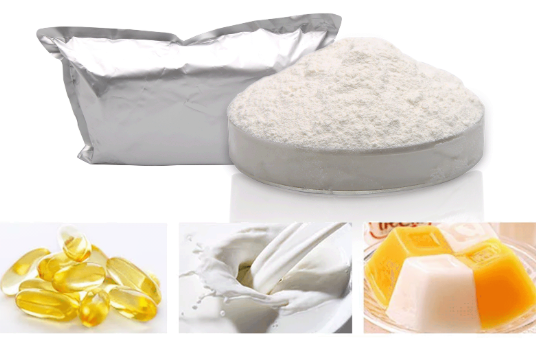
Food-grade HA focuses primarily on solubility and safety, making it suitable for a variety of dietary supplements and conventional foods.
Key Characteristics:
- Must comply with standard QB/T 4576-2013 for sodium hyaluronate
- Testing includes sensory attributes, content, moisture, ash, pH, light transmittance, heavy metals, arsenic, and microbiological indicators
- Produced through microbial fermentation
Product Categories:
- Sodium hyaluronate
Primary Applications:
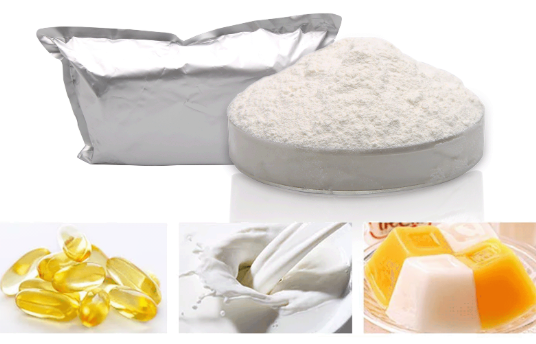
- Dietary supplements in gel, tablet, powder, or liquid form
- Beverages and functional drinks
- Conventional foods like candies
HA can be added to beverages, gummies, and similar products. Medical-grade oral products require strict Medical standards, while food-grade HA is subject to relatively lighter regulation—though it still must meet food safety standards.
|
Four Grades of Hyaluronic Acid Raw Material Comparison |
||||
|
Raw Material Category |
Properties |
Product Classification |
Core Technology |
Product Applications |
|
Medical Grade |
Biocompatibility, viscoelasticity, lubricity |
Medical topical grade |
Microbial fermentation technology |
Eye drops, contact lens solutions, topical medications, oral preparations, etc. |
|
Medical device grade |
Wound healing topical preparations, cavity lubricants, drug carriers, ophthalmic viscosurgical devices, soft tissue fillers, anti-adhesion agents, membrane preparations, etc. |
|||
|
Injectable Grade |
Biocompatibility, viscoelasticity, lubricity |
Injectable grade |
Microbial fermentation technology |
Ophthalmic viscosurgical devices, soft tissue fillers, anti-adhesion agents, medications for knee arthritis, osteoarthritis, frozen shoulder improvement, etc. |
|
Cosmetic Grade |
Moisturizing, film-forming, bioactivity |
Sodium hyaluronate raw material |
Microbial fermentation technology, bio-enzymatic cutting technology, cross-linking technology |
Sun protection, cleansing, moisturizing, repairing, antioxidant, anti-competitor skincare, haircare, makeup, cleansing and other products |
|
Sodium hyaluronate derivatives |
||||
|
Food Grade |
Solubility |
Sodium hyaluronate |
Microbial fermentation technology |
Gels, tablets, powders, oral liquids and other health foods or beverages, candies and other ordinary foods |
|
Hyaluronic Acid Supplier: stanfordchem.com; hyaluronicacidsupplier.com |
||||
Summary
The classification of hyaluronic acid grades essentially comes down to purity requirements, sterility standards, and target applications. Medical grade, medical device grade, and injectable grade form the medical-use tier, with progressively tighter sterility and purity demands at each level. Cosmetic grade emphasizes molecular weight control and functional performance. Food grade prioritizes safety and palatability.
Different molecular weights deliver significantly different effects. High-molecular-weight HA forms a protective film on the surface, while low-molecular-weight HA penetrates deeper and stimulates collagen renewal. When choosing an HA product, match the grade to your specific use case, desired outcomes, and safety requirements.