
The use of hyaluronic acid (HA) in scar treatment has been widely studied, but different types of products can give very different results.
Which Grade of Hyaluronic Acid Works Best?
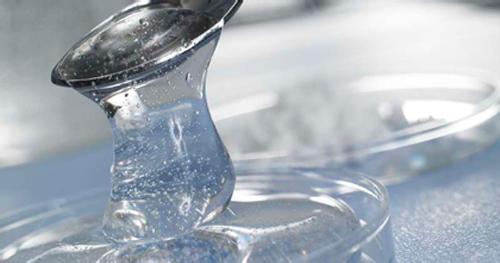
Injectable-grade hyaluronic acid is the top choice for scar treatment.
In clinical studies on scar treatment, only injectable or medical-grade HA has been used. For example, in a two-year prospective clinical study, researchers used VYC-17.5L, an injectable cross-linked hyaluronic acid filler. Results showed a significant drop in scar severity scores, and the effects lasted up to 720 days.[1]
Another study on atrophic acne scars used a 4.5% high-concentration injectable hyaluronic acid. This product is made through bacterial fermentation, comes from non-animal sources, and has a good safety profile.[2]
Cosmetic-grade hyaluronic acid is mainly for hydrating the surface of the skin. It can improve the appearance of scars to some extent, but it doesn't provide the volume or structural support that injectable-grade HA does.
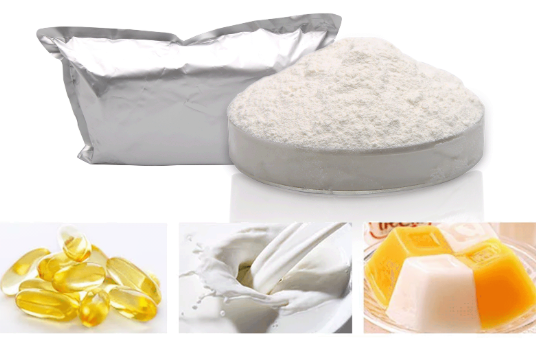
Food-grade hyaluronic acid isn't considered effective for direct scar treatment.
Which Molecular Weight of Hyaluronic Acid Works Best?
High molecular weight HA (HMW-HA) works better for preventing scar formation, while low and medium molecular weight HA each play a role in the early stages of wound healing.
High Molecular Weight HA (>1000 kDa)
Studies show that HMW-HA has anti-inflammatory, anti-angiogenic, and immunosuppressive properties. It helps wounds heal and prevents scars from forming. In the later stages of wound healing, HMW-HA lowers TNF-α levels and raises IL-10, helping macrophages switch from the M1 to the M2 type, which supports tissue repair.
Low to Medium Molecular Weight HA (10–1000 kDa)
LMW-HA has pro-inflammatory, pro-angiogenic, and immune-stimulating effects.[3] In the early stages of wound healing, this pro-inflammatory action helps kickstart the repair process. Studies also show that HA in the range of 1800 kDa down to 50 kDa mainly works through the CD44 receptor, with only a small increase in pro-inflammatory biomarkers.
High-Concentration Hybrid Complex (HCC)
One noteworthy 2024 clinical study used a high-concentration (4.5%) hybrid complex of high and low molecular weight HA to treat atrophic acne scars. This product contains both HMW and LMW components. After four months of treatment, scar depth decreased by an average of 20%, and Goodman and Baron scores improved by 31%. This complex takes advantage of LMW-HA's ability to stimulate fibroblast and keratinocyte differentiation, as well as HMW-HA's high water retention and its ability to interact with collagen and proteoglycans.
Be Careful with Very Low Molecular Weight (<10 kDa)
Studies have found that very small HA fragments (around 6 kDa) actually slow down wound repair and cause a strong inflammatory response (over 30 times higher than the control group). So lower isn't always better.
Which Structure of Hyaluronic Acid Works Best?
Cross-linked hyaluronic acid lasts longer, while non-cross-linked HA has unique value when combined with other treatments.
Cross-Linked Hyaluronic Acid
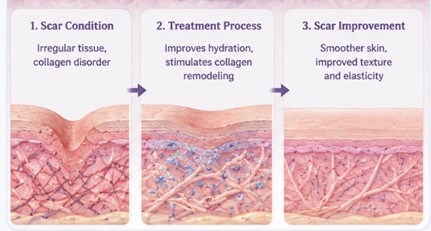
Cross-linked HA forms a 3D network through chemical cross-linking, which makes it more stable and longer-lasting in the body. Clinical studies confirm that cross-linked HA fillers (like VYC-17.5L) can improve atrophic facial scars for up to two years. The studies also show an average reduction of 8.8 scars per patient, with 92% of patients reporting improvement and satisfaction. [1]
The main advantages of cross-linked HA are:
- Provides long-lasting volume correction
- Resists breakdown, so effects last longer
- Works well for deeper atrophic scars
Non-Cross-Linked Hyaluronic Acid
Non-cross-linked HA keeps the natural biological activity of hyaluronic acid. While it may not last as long as cross-linked products when used alone, it has good value in combination therapies.
A randomized double-blind study found that when non-cross-linked HA was combined with platelet-rich plasma (PRP) to treat acne scars, both patient and physician satisfaction were higher than with PRP alone or non-cross-linked HA alone. This shows that non-cross-linked HA can be an effective part of a combination treatment plan.
HA Elastomers / Complexes
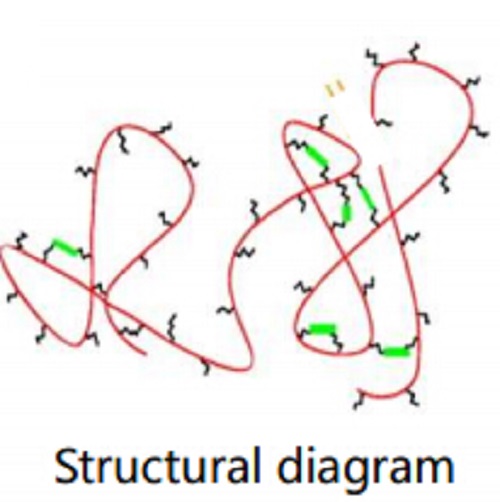
Hybrid HA technologies (like the hybrid cooperative complex, HCC) offer another direction. These products use non-covalent bonding between high and low molecular weight HA to form a unique structure that balances biological activity and longevity. Studies show that HCC products are safe and effective over a 4-month treatment period.
Summary
Based on clinical research, here’s a quick guide for choosing hyaluronic acid for different types of scars:
|
Scar Type |
Recommended HA Type |
|
Atrophic acne scars |
Cross-linked HA (injectable grade) |
|
Various atrophic scars |
High-concentration high/low MW complex (HCC) |
|
Combined with laser/microneedling |
Non-cross-linked HA |
|
Post-surgical facial scars |
Cross-linked or non-cross-linked HA (with microneedling) |
|
During wound healing |
High molecular weight HA |
For existing atrophic scars, cross-linked HA gives the longest-lasting improvement.
The high/low molecular weight complex offers both biological activity and volume correction.
And in combination treatments, non-cross-linked HA also plays an important role.
Choosing the right HA depends on the scar type, treatment goals, and the patient's specific situation.
If you're a scar product developer looking for the right hyaluronic acid raw material, feel free to contact Stanford Chemicals for more detailed information.