
Vitamins are a type of organic compound that the human body cannot synthesize, or can only produce in amounts too small to meet its needs. They must be obtained from food to maintain normal life activities. Vitamins are also one of the essential nutrients and play an important role in regulating metabolism, growth and development, and supporting normal physiological functions.
What Vitamins Does Your Body Need?
The vitamins you need to supplement mainly include fat-soluble vitamins (B vitamins, vitamin C) and water-soluble vitamins (vitamins A, D, E, K). Each vitamin has its own unique functions:
• Vitamin A: Maintains vision, skin, and mucous membrane health
• B Vitamins (B1, B2, B3, B5, B6, B7, B9, B12): Involved in energy metabolism and nervous system function
• Vitamin C: Antioxidant, boosts immunity, promotes collagen synthesis
• Vitamin D: Promotes calcium absorption and maintains bone health
• Vitamin E: Antioxidant, protects cell membranes
• Vitamin K: Supports blood clotting
We’ve covered each vitamin in detail here: Vitamin Guide: 14 Important Vitamins for Health
Don’t Take Vitamins Randomly! Check What You’re Deficient In
Blindly supplementing vitamins not only wastes money but may also pose health risks. Excess fat-soluble vitamins (A, D, E, K) can accumulate in the body and cause toxicity. The best approach is to observe your body’s signals first, then adjust your diet or supplementation accordingly.
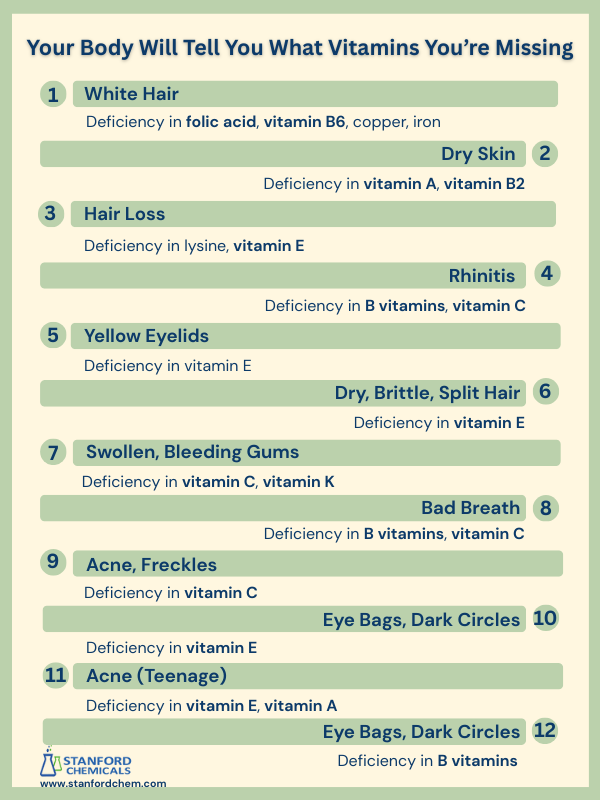
1. Premature Graying of Hair (Not Age-Related)
Possible nutrient shortfalls: Folate (B9), vitamin B6, copper, iron. Melanin production needs multiple enzymes to work properly. Folate and B6 assist in creating the base materials for pigment. Copper is part of the tyrosinase enzyme, which is involved in coloring. Low iron can reduce oxygen flow to hair follicles, slowing down their cell activity.
2. Dry, Rough, or Bumpy Skin
Often linked to low levels of: Vitamin A and vitamin B2 (riboflavin). Vitamin A helps skin cells develop correctly; without it, skin may become dry and develop small rough patches. Vitamin B2 aids in tissue repair, so insufficient amounts can impact skin and mucous membrane health.
3. Unusual Hair Loss (When Not Hereditary)
May signal a deficiency in: Lysine and vitamin E. Lysine is a building block for keratin, the main protein in hair. Vitamin E acts as an antioxidant, supporting scalp circulation and shielding hair follicles from oxidative stress.
4. Frequent Runny Nose, Colds, or Low Immunity
Could point to low: B vitamins (especially B6, B12, folate) and vitamin C. B vitamins help with energy and immune responses, affecting how well your body makes antibodies and immune cells. Vitamin C strengthens certain immune cells, protects the lining of your respiratory tract, and can ease allergy-like symptoms.
5. Yellowish Patches on Eyelids
Sometimes related to low: Vitamin E. Research suggests these patches may be tied to how your body handles fats and oxidative stress. Vitamin E, a fat-soluble antioxidant, might help with this balance. Keep in mind, though, these patches can also indicate high cholesterol, so it’s good to get checked by a doctor.
6. Dull, Brittle, or Easily Splitting Hair
Possibly lacking in: Vitamin E. Hair needs natural oils to stay protected. Without enough vitamin E, scalp oil quality may drop, and hair becomes less able to handle sun exposure and other oxidative damage.
7. Swollen or Bleeding Gums
Often linked to insufficient: Vitamin C and vitamin K. Vitamin C helps produce collagen, keeping gum tissue strong and less likely to bleed. Vitamin K supports blood clotting, so a shortage can mean gums bleed more easily and take longer to stop.
8. Persistent Bad Breath
May indicate low intake of: B vitamins and vitamin C. Not getting enough B vitamins can disrupt digestion and encourage oral bacteria overgrowth. Low vitamin C may contribute to gum problems, which can also make bad breath worse.
9. Acne Breakouts, Freckles, or Uneven Skin Tone
Commonly tied to low: Vitamin C. As an antioxidant, vitamin C helps limit melanin production and can lighten dark spots. It also promotes healing and reduces inflammation, which may help calm acne.
10. Noticeable Eye Bags or Dark Circles
May be associated with low: Vitamin E. The skin around your eyes is thin, so poor blood flow can lead to pooled blood and discoloration. Vitamin E supports healthy circulation and, through its antioxidant effect, may help reduce pigment buildup.
11. Recurring Acne
Potential deficiencies: Vitamin E and vitamin A. Vitamin A helps control skin cell turnover and oil production — too little can cause pores to clog. Vitamin E helps soothe inflammation and protects skin from oxidative damage. Note: High-dose vitamin A (such as isotretinoin) requires a prescription — never self-prescribe high amounts due to toxicity risks.
12. Beriberi
Caused by a severe lack of: B vitamins, particularly vitamin B1 (thiamine). Beriberi symptoms include tiredness, poor appetite, muscle weakness, tingling in hands and feet, and in serious cases, heart issues. Vitamin B1 is key for turning food into energy — without it, nerves and muscles don’t get the fuel they need.
How to Supplement Vitamins?
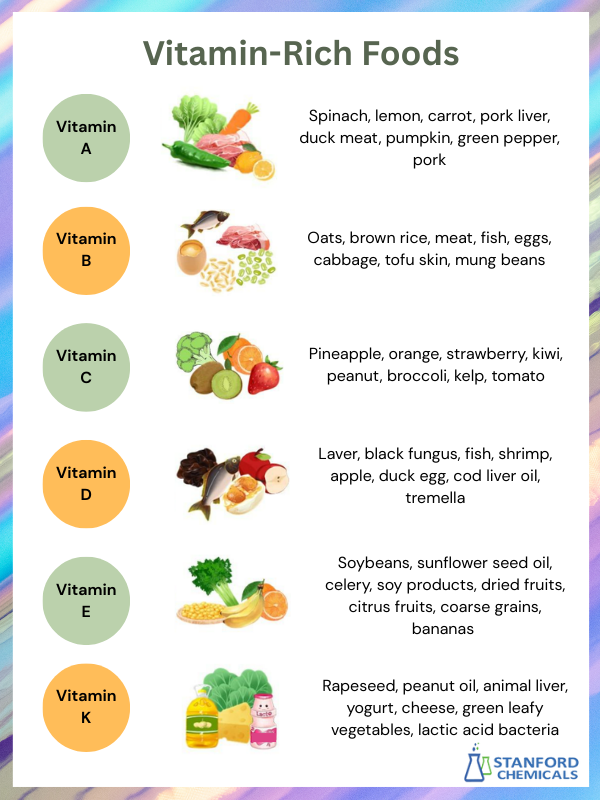
The safest and most effective way is through a balanced, varied diet. Vitamins in natural foods exist in complex forms, making them easier for the body to absorb and use, with a lower risk of overdose. We’ve compiled a list of foods rich in various vitamins.
If you come across foods you dislike or are averse to, aside from holding your nose and forcing them down, you can also opt for vitamin supplements. For those who avoid all meat, fish, eggs, and dairy, a B12 supplement is essential. People who dislike leafy greens may opt for supplements focused on folate (B9), vitamin K, vitamin A (precursors), magnesium, and dietary fiber.
Stanford Chemical Company (SCC) has over 16 years of experience in the production and sales of plant-based chemicals, pharmaceutical intermediates, and related products. Our offerings include hyaluronic acid, herbal extracts, vitamins, food additives, nutraceutical ingredients, and more—over 800 products in total. If you’re interested, feel free to request a quote or learn more.